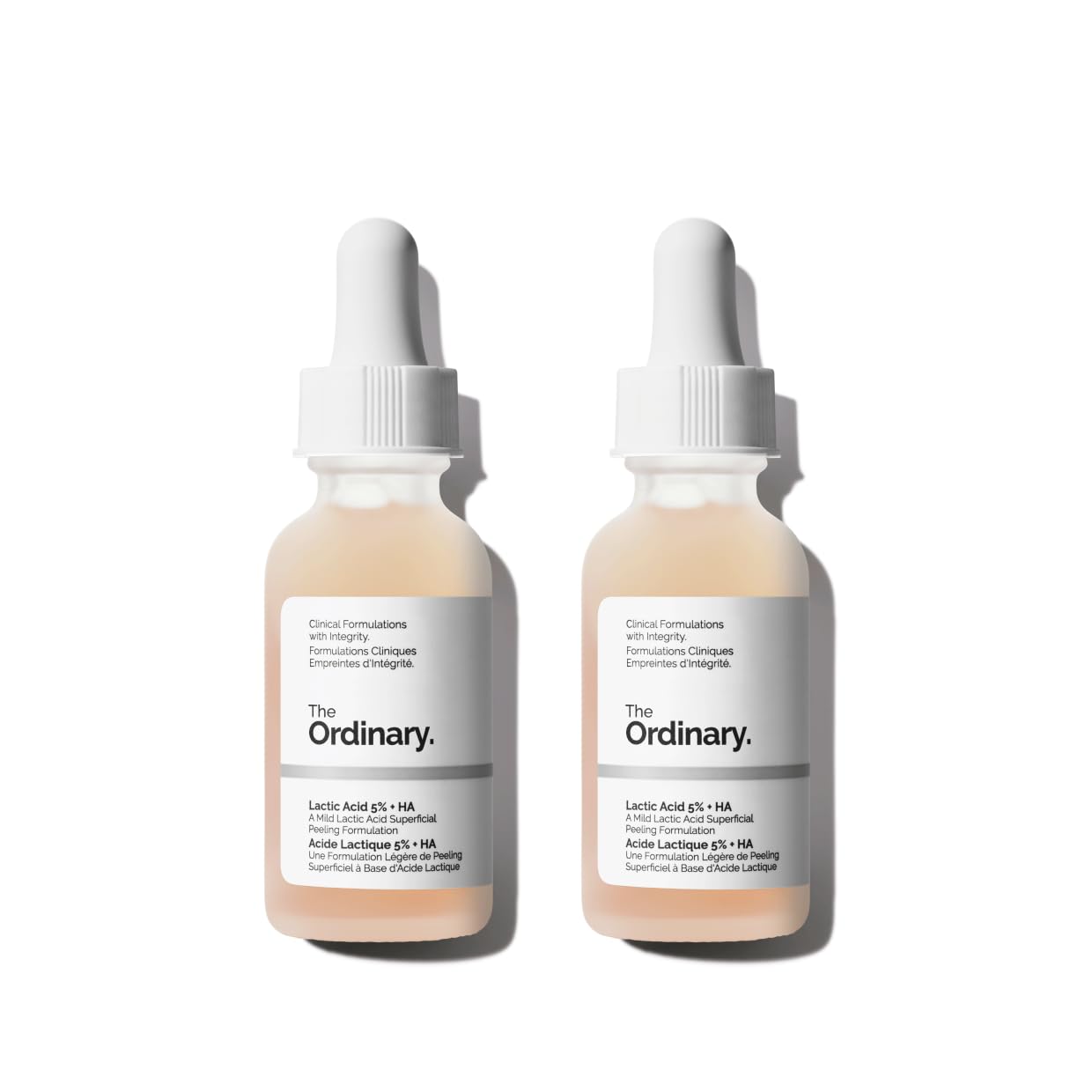
The Ordinary Lactic Acid 5% + Hyaluronic Acid 2% – Fragrance-Free Gentle Exfoliating Serum for Reactive, Sensitive Skin
The Ordinary Lactic Acid 5% + Hyaluronic Acid 2% – Fragrance-Free Gentle Exfoliating Serum for Reactive, Sensitive Skin
Couldn't load pickup availability
Why you'll love it
- Milder 5% lactic acid concentration is approachable for sensitive or first-time acid users compared to stronger 10% or glycolic formulas
- Combines exfoliation with 2% hyaluronic acid so skin stays hydrated rather than stripped
- Tasmanian Pepperberry extract actively calms irritation, reducing the redness and stinging common with AHA products
- Fragrance-free, water-based formula minimizes risk of reaction for reactive skin
- The Ordinary's reputation for clinical, no-frills ingredients at an accessible price point delivers premium-actives value
- Dropper bottle enables controlled, hygienic dosing for a precise nighttime application
Perfect for
- Nightly gentle exfoliation to smooth rough skin texture
- Brightening dull complexion while maintaining hydration
- Introductory chemical exfoliant for sensitive or acid-newbie skin
- Layering a hydrating serum after exfoliation in a multi-step PM routine
- Stocking up with the 2-pack for an extended multi-month routine


Product Information
GENTLE EXFOLIATION: A milder alpha hydroxy acid solution with 5% lactic acid that gently smooths skin texture and reveals a brighter complexion.
HYALURONIC ACID SUPPORT: Formulated with hyaluronic acid.
ANTI-IRRITANT: Enhanced with Tasmanian Pepperberry extract, a known anti-irritant.
PERFECT FOR DRY AND SENSITIVE SKIN: This water-based serum offers effective exfoliation while maintaining hydration, ideal for dry or sensitive skin types.
USE AT NIGHT: Apply once daily in the evening and use sunscreen the next day to protect your skin from sun sensitivity.
Features & Specs
Item Form: Liquid
Skin Type: All
Product Benefits: Gently smooths skin texture and reveals a brighter complexion.
Active Ingredients: Alpha Hydroxy, Lactic Acid, lactic_acid
Additional Features: Exfoliating
Container Type: dropper bottle
Scent Name: Fragrance Free
Target Use Body Part: Face
Special Ingredients: Alpha Hydroxy, Hyaluronic Acid
Skin Tone: All
Frequently Asked Questions
Will this serum sting or cause redness if I have sensitive skin?
The 5% lactic acid concentration is on the gentler end of the AHA spectrum, and the formula includes Tasmanian Pepperberry extract, which is included specifically to calm the skin during exfoliation. Most users with sensitive skin tolerate it well, especially when starting at two nights per week. A small percentage of users with very reactive skin may still experience mild tingling, which is normal for any acid.
Is this product safe to use on skin that is prone to eczema or rosacea?
While the formula is designed to be gentle, anyone with active eczema, rosacea, or a compromised skin barrier should consult a dermatologist before introducing any acid. Used cautiously and infrequently, lactic acid is often better tolerated than glycolic by these skin types. Start with a patch test on the jawline and wait 24 hours to assess your response.
Does the formula contain any common irritants I should worry about?
The formula is fragrance-free, essential-oil free, and alcohol-free, which removes three of the most common irritants in skincare. It also avoids drying sulfates and harsh preservatives. The ingredient list is short and built around soothing, well-tolerated components.
Can I use this product if I have never used an acid before?
Yes, this is one of the most recommended entry-level acid products on the market. The 5% lactic acid concentration is approachable, and the supporting ingredients are designed to make the first experience positive. Start with one evening per week, build slowly, and you should have a smooth introduction.
Is the dropper bottle hygienic, or will it contaminate the formula?
The dropper is the standard hygienic dispensing method for water-based serums, and the formula includes a safe preservative system to prevent microbial growth. Do not touch the dropper tip with your fingers, and recap promptly after use. These simple practices keep the bottle clean for the full lifespan of the product.
How does this compare to stronger 10% lactic acid formulas in terms of safety?
A 10% lactic acid formula delivers faster exfoliation but at a higher risk of irritation, redness, and barrier disruption. The 5% version provides meaningful smoothing with a much wider safety margin, especially for sensitive or beginner skin. Many dermatologists recommend starting at 5% and only moving up if you want more dramatic results and have proven tolerance.
Is this product safe to use around the eye area?
Avoid direct contact with the eyes, and do not apply to the eyelids or directly under the eyes unless directed by a dermatologist. The orbital bone area is generally fine, but the skin immediately around the lash line is too thin and sensitive for any acid. Keep the application to the cheeks, forehead, nose, and chin.
Can I use it if I am pregnant or nursing?
Topical lactic acid is generally considered low risk during pregnancy and nursing, but you should always confirm with your OB-GYN or midwife before introducing any new active. Many healthcare providers are comfortable with low-concentration AHAs during this time. When in doubt, defer to your provider's guidance.
Will this product make my skin more sensitive to the sun?
All AHAs can increase photosensitivity to a small degree because they remove surface dead cells that would otherwise provide a tiny amount of UV protection. Wearing a broad-spectrum SPF 30 or higher the morning after use is essential. This is a basic safety practice rather than a serious concern.
Is there a risk of over-exfoliation if I use it too often?
Yes, like any active, it is possible to overdo it. Signs include persistent tightness, flaking, shiny tight skin, increased sensitivity, and breakouts in new areas. If you notice any of these, take a full week off from the serum and focus on a gentle cleanser and rich moisturizer until your barrier recovers.
Can I layer it with other actives like retinol or vitamin C?
It depends on your skin's tolerance. The safest approach is to alternate nights, using lactic acid on some evenings and retinol or vitamin C on others, rather than layering them in the same routine. If you want to combine them, use lactic acid in the PM and vitamin C in the AM. Beginners should introduce one active at a time.
What should I do if I experience a bad reaction?
Stop using the product immediately and rinse the area with cool water. Apply a simple, fragrance-free moisturizer and avoid any other actives until the skin calms. If irritation persists for more than a few days, consult a dermatologist. Severe reactions are rare with this formula but should always be taken seriously.
Is the formula non-comedogenic and safe for acne-prone skin?
Lactic acid is widely used in acne-prone routines because it helps clear pore congestion and smooth post-blemish texture. The formula is non-comedogenic, meaning it will not clog pores. If you are using prescription acne treatments, talk to your dermatologist before adding this serum.
How do I know if my skin is tolerating the product well?
Mild tingling for the first minute after application is normal and usually fades quickly. Signs of good tolerance include no lasting redness, no flaking, and a smoother feel the next morning. If you experience persistent burning, visible redness lasting hours, or new breakouts, reduce frequency or discontinue use.
Are there any ingredients in the formula that allergy sufferers should flag?
The main ingredients are lactic acid, hyaluronic acid, Tasmanian Pepperberry extract, and water, along with standard formulation stabilizers. There is no nut oil, no gluten, and no common fragrance allergen. If you have a known pepperberry or botanical sensitivity, do a patch test first.
Is this a safer choice than physical scrubs for sensitive skin?
Yes. Physical scrubs create micro-tears in the skin barrier and can drive inflammation, especially in sensitive or reactive skin types. Lactic acid works by dissolving the bonds between dead cells chemically, without abrasion. For sensitive skin, a chemical exfoliant at 5% is almost always the safer choice.
How do I use The Ordinary Lactic Acid 5% + HA 2% in my routine?
Apply a few drops to clean, dry skin in the evening after cleansing and before moisturizer. Spread evenly across the face and neck, avoiding the eye area. Follow with a hydrating serum or night cream, and always use SPF the following morning. Start with two to three nights per week and build frequency as your skin tolerates.
Can I use it every night?
Some users with tolerant skin can use it nightly, but beginners should start at two to three nights per week to assess tolerance. Using it too often can compromise the skin barrier and lead to irritation. Build up gradually based on how your skin responds.
Should I use it in the morning or at night?
It is designed for nighttime use, primarily because AHAs can increase sun sensitivity and because the skin's natural repair cycle happens during sleep. If you use it in the AM, follow with a broad-spectrum SPF 30 or higher. PM use is the standard recommendation.
Is this product compatible with retinol?
It can be, but you should not layer them in the same routine. The safest approach is to alternate nights, using lactic acid on some evenings and retinol on others. If you are new to both actives, introduce them one at a time, two to four weeks apart, to monitor your skin's response.
Can I use it with vitamin C, niacinamide, or other popular serums?
Yes, with a few guidelines. Vitamin C is best used in the morning while lactic acid is best at night, so they rarely compete. Niacinamide can be used in the same routine and is often layered with lactic acid to support the barrier. Hyaluronic acid and most peptide serums layer safely underneath or over the lactic acid.
What is in the box when I order this product?
You will receive either a single 1 Fl Oz glass dropper bottle or a 2-pack of two 1 Fl Oz bottles, depending on your selection. The bottles are sealed with a standard dropper closure and a tamper-evident cap. No additional accessories are required to use the product.
How long will one bottle last?
Used two to three times per week, a 1 Fl Oz bottle typically lasts three to four months. Used nightly, it lasts about six to eight weeks. The 2-pack is a good value if you plan to use it consistently for four to six months.
Are there any safety concerns I should know about before using it?
The main safety considerations are sun sensitivity, possible irritation when overused, and avoiding the eye area. Always wear SPF the day after use, start slowly to assess tolerance, and stop if you experience persistent irritation. Patch testing on the jawline is a smart precaution for anyone with very reactive skin.
What if the product changes color or smells off?
The formula should be a clear to slightly hazy water-like liquid with a neutral scent. If the color turns yellow, the scent becomes sour, or you notice separation, the product may have expired or been contaminated. Discontinue use and contact the retailer if this occurs within the listed shelf life.
What is the difference between lactic acid and glycolic acid, and why choose this one?
Both are AHAs that exfoliate the skin's surface, but lactic acid has a larger molecule that penetrates more slowly, making it gentler and less likely to cause stinging. Glycolic acid works faster and deeper but is more irritating for sensitive skin. Lactic acid is also naturally moisturizing as it exfoliates, which is why this formula is a popular choice for beginners and dry or sensitive skin types.