Mountain House Creamy Macaroni & Cheese – Freeze Dried Camping Dinner for Backpacking, Paddling & Trail Fueling
Mountain House Creamy Macaroni & Cheese – Freeze Dried Camping Dinner for Backpacking, Paddling & Trail Fueling
Couldn't load pickup availability
Why you'll love it
- Feels like real comfort food rather than typical bland trail rations, so morale stays high on long trips
- 12+ year shelf life makes it a worry-free addition to emergency kits and stockpiles
- Zero cleanup and eat-from-pouch design means more time enjoying the outdoors
- Lightweight pouch trims pack weight versus canned or fresh alternatives
- No artificial preservatives or flavors appeals to health-conscious outdoor eaters
- Stand-up, bowl-shaped pouch makes eating easier without a separate dish
- Smells like burnt cheese bits — mimics homemade pan appeal
- Resealable pouch allows you to save half for later
- Cooks inside its own package (no extra pot/cleanup)
- Holds smell in so animals/critters aren't attracted to it in storage
- Provides enough calories to sustain 9 hours of paddling
- Picky kid finished every bite — beat out all other camping food options
- Impressive to self-proclaimed mac and cheese snob
- Creamy texture reminiscent of Stouffer's frozen mac and cheese
- Freeze-dried texture appeals to kids (compared to astronaut ice cream)
- Chewier noodle texture than expected from a freeze-dried meal
Perfect for
- Hot dinner on a multi-day backpacking trip where pack weight matters
- Easy campsite meal that requires only boiling water and zero cleanup
- Long-term emergency food storage for power outages or natural disasters
- Comfort food while tent-bound during bad weather on a trip
- Quick lunch or dinner during a road trip or overlanding adventure
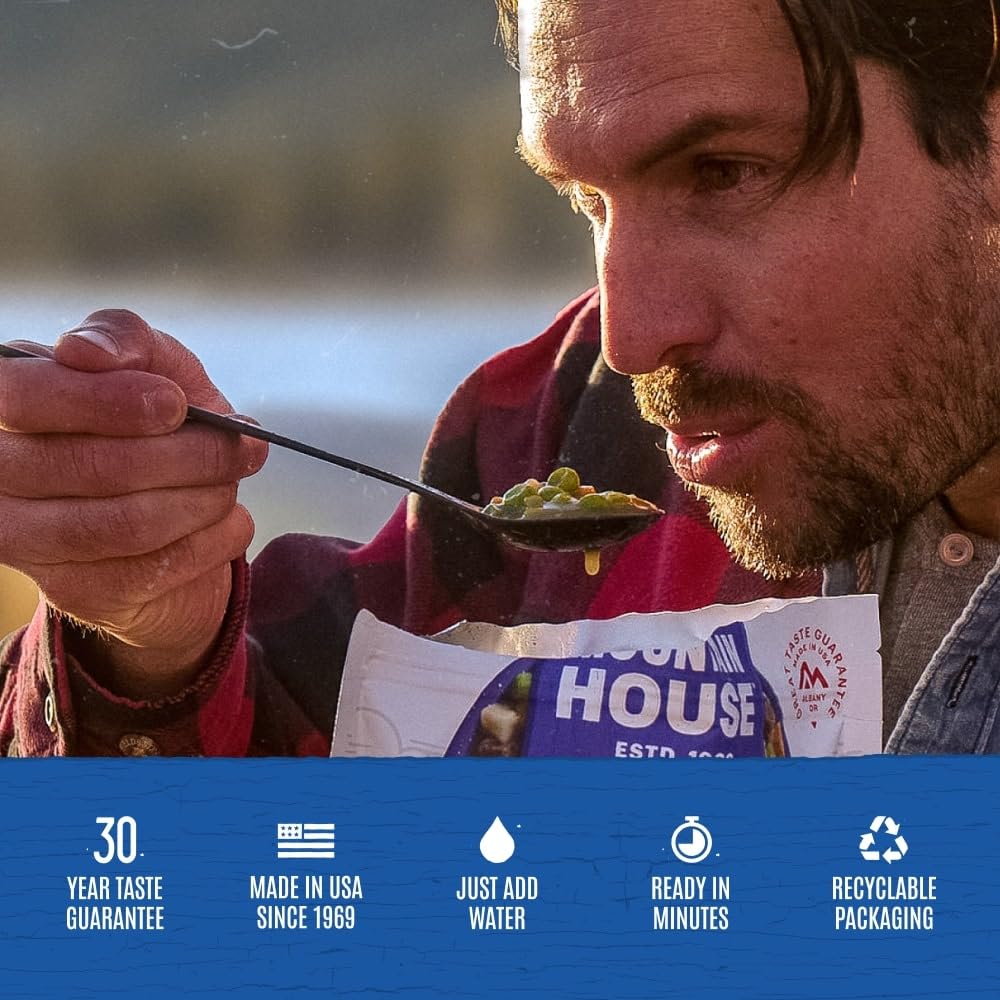
- Eating straight from the pouch with a long-handled spoon on the trail
- Hurricane preparedness (specifically mentioned Hurricane Helene in Asheville)
- Base meal for a custom recipe — adding canned rotel and hamburger to make 'cheese goulash'
- Adding dry chili peppers for extra heat/spice
- Dual sport motorcycle riding fuel
- Paddling 9 hours on a river as calorie-dense fuel
- At-home 'splurge' dinner as a quick alternative to homemade mac and cheese
- First-time testing at home before committing to carry on a trip
- Emergency stash for people who are not typically outdoorsy
About this item
Mountain House has been the #1 brand in backpacking foods for many years because these meals are extremely light weight and taste great. Pack light. Eat right. With the easy-to-prepare stand up, zipper pouch, it's never been easier to make a great tasting meal! Simply open, pour in boiling water, and zip. Then eat right out of the pouch. Mountain House pouches have a shelf life of at least 12 years from the date of manufacture as long as the pouch is stored unopened in a cool area. This pouch makes 3 servings of food when prepared.
- Product Dimensions : 8.25 x 4 x 8.5 inches; 5.29 ounces
- Ingredients: On the product
- Nutritional value: On the product
Frequently Asked Questions
Will this pouch hold up if I shove it deep into my backpack for a multi-day hike?
Yes. The stand-up zipper pouch is built to handle the jostling and compression of a packed bag. It is lightweight, flexible, and puncture resistant enough for backcountry use, and the zipper keeps contents sealed so no smell leaks out to attract wildlife.
How many calories do I actually get for a long paddling or riding day?
The two-serving pouch delivers enough calories to function as a full dinner or a fuel stop on a long effort day. Customers report that it sustained them through nine-hour river paddling sessions and long dual sport motorcycle rides.
Can I eat this straight from the pouch without dirtying a dish in camp?
Absolutely. The bowl-shaped, stand-up pouch is designed to be eaten from directly. Just add boiling water, stir, seal, wait, and eat with a long-handled spoon. There is zero cleanup and no pot to carry.
Is the packaging going to bother bears or rodents at my campsite?
The resealable zipper is engineered to trap odor inside the pouch, which reduces the chance that curious animals will be drawn to it while it sits in your pack or bear canister between meals.
Will it work in an RV, a tent site, or even a roadside pull-off?
Yes. All you need is a way to boil water — a camp stove, JetBoil, RV kettle, or even a hotel coffee maker on a road trip. The pouch self-contains the cooking, so it works anywhere hot water is available.
Is this a hot dinner I can count on after a long day on the trail?
Yes. This is one of the most popular freeze dried hot dinners on the market. It cooks inside its own pouch in under ten minutes and delivers a warm, creamy comfort food payoff that hikers specifically call out as a morale booster.
How heavy is the pouch compared to carrying a can of pasta or a homemade meal?
The freeze dried pouch is significantly lighter than canned alternatives and eliminates the weight of a pot, water for cooking, and a bowl. It is a top choice for thru-hikers counting every ounce in their pack.
Does it survive being stored in a hot car or in direct sun at a trailhead?
The pouch has a 12+ year shelf life when stored unopened in a cool, dry place. Short exposures to heat in a car are fine, but for best results and longest shelf life, keep it out of direct sun and out of extreme heat.
Is the noodle texture going to feel like astronaut food or like real pasta?
Customers consistently report that the noodles are chewier and more satisfying than typical freeze dried meals, and the creamy cheese sauce is closer to a homemade stovetop mac than a powdered packet. It does not taste like astronaut ice cream.
How do I get even rehydration if I am cooking it on a camp stove at altitude?
Shake the pouch before adding water to distribute the cheese powder evenly, then stir thoroughly after pouring in boiling water and again before eating. At higher altitudes, let it steep a few minutes longer to ensure full rehydration.
How does Mountain House Mac & Cheese compare to a homemade macaroni and cheese at the campsite?
It is not a replacement for a cast-iron homemade version, but reviewers describe the taste and creamy texture as comparable to a Stouffer's frozen mac and cheese — which is a major compliment for a backcountry meal. The trade-off is weight, cleanup, and convenience.
Why pick a freeze dried pouch over ramen or instant pasta cups for camping?
Ramen is lighter and cheaper, but it lacks the calorie density, real cheese flavor, and protein of this meal. The Mountain House pouch delivers a satisfying comfort food experience that ramen cannot match, which matters on multi-day trips when morale and energy are both declining.
Can I customize this base meal with extras at the campsite?
Yes. Customers regularly add canned rotel and ground beef to make a cheese goulash, or toss in crushed dried chili peppers for heat. The pouch is a versatile base that takes additions well without changing the prep method.
Will the cheese flavor hold up after eight hours in a hot pack on a summer hike?
The resealable zipper seals in both flavor and aroma, and the freeze dried ingredients are shelf stable in the pouch even when the pack warms up. The taste at dinner will be the same as when you packed it that morning.
What if I only want half the pouch for one meal — can I save the rest?
Yes. The resealable pouch is designed so you can cook and eat half, then fold the zipper closed and save the rest for the next day. It is a practical way to stretch one pouch across two lighter dinners.
Is this going to feel like bland trail food or something I actually look forward to?
It is one of the most craveable freeze dried meals available. Reviewers describe it as comfort food that genuinely boosts morale on long trips, and many hikers rotate it into every multi-day resupply for that reason.
How do I prepare Mountain House Mac & Cheese step by step?
Open the pouch, remove the oxygen absorber, and shake the bag to distribute the cheese powder. Add the recommended amount of boiling water, stir well, seal the pouch, and let it sit for about 8 to 10 minutes. Stir again and eat directly from the pouch with a long-handled spoon.
How long should I let the pouch sit after adding boiling water?
Plan on roughly 8 to 10 minutes for full rehydration, depending on altitude and water temperature. At higher elevations, give it an extra minute or two to make sure the noodles soften completely.
Can I use water that is not quite boiling if I am out of fuel?
You will get the best texture and flavor with truly boiling water. Hot tap water or barely simmering water will rehydrate the meal, but the noodles will be chewier and the sauce thinner. It is still edible, just not at its best.
What stove or pot works with this pouch?
Anything that can boil water works — a JetBoil, an MSR Pocket Rocket, an RV kettle, a hotel coffee maker, an electric kettle at a campground, or even a microwave if you transfer the contents to a microwave-safe bowl first. The pouch is the only cooking vessel you need.
Does this pouch fit inside a standard backpacking bear canister?
The flexible pouch is sized to fit inside most popular bear canisters, including the BV500 and BearVault models, and it conforms to the shape of the canister better than a rigid container would.
What exactly comes inside the pouch when I open it?
You will find the freeze dried macaroni and cheese blend along with a small oxygen absorber that protects freshness. The absorber is not edible and should be discarded before adding water. A long-handled spoon is sold separately.
Is this meal safe to eat if my power has been out for several days?
Yes. As long as the pouch was unopened and stored in reasonable conditions, the freeze dried contents are shelf stable. You only need a way to heat water — a camp stove, a grill, a fire, or even a vehicle — to prepare a hot meal during an outage.
Can I trust the 12+ year shelf life on the package?
Yes. Mountain House has a long track record of producing freeze dried meals that hold their quality for well over a decade when stored unopened in a cool, dry place. For maximum shelf life, avoid temperature swings and direct sunlight.
What is the difference between freeze dried and dehydrated backpacking meals?
Freeze dried meals are processed at lower temperatures, which preserves more flavor, color, and nutrients, and they rehydrate faster. Dehydrated meals are typically cheaper and lighter but can have a chewier texture and longer cook time. Mountain House is freeze dried, which is why the mac and cheese tastes closer to a homemade version.