Elan Publishing Company Field Surveying Book 4 5/8 x 7 1/4 - Pocket Field Notebook for Hiking and Trail Mapping
Elan Publishing Company Field Surveying Book 4 5/8 x 7 1/4 - Pocket Field Notebook for Hiking and Trail Mapping
Couldn't load pickup availability
Why you'll love it
- Water-resistant 50% cotton paper keeps notes legible in rain, mud, or humid conditions
- High-visibility orange cover is easy to spot among gear, leaves, or snow on a busy site
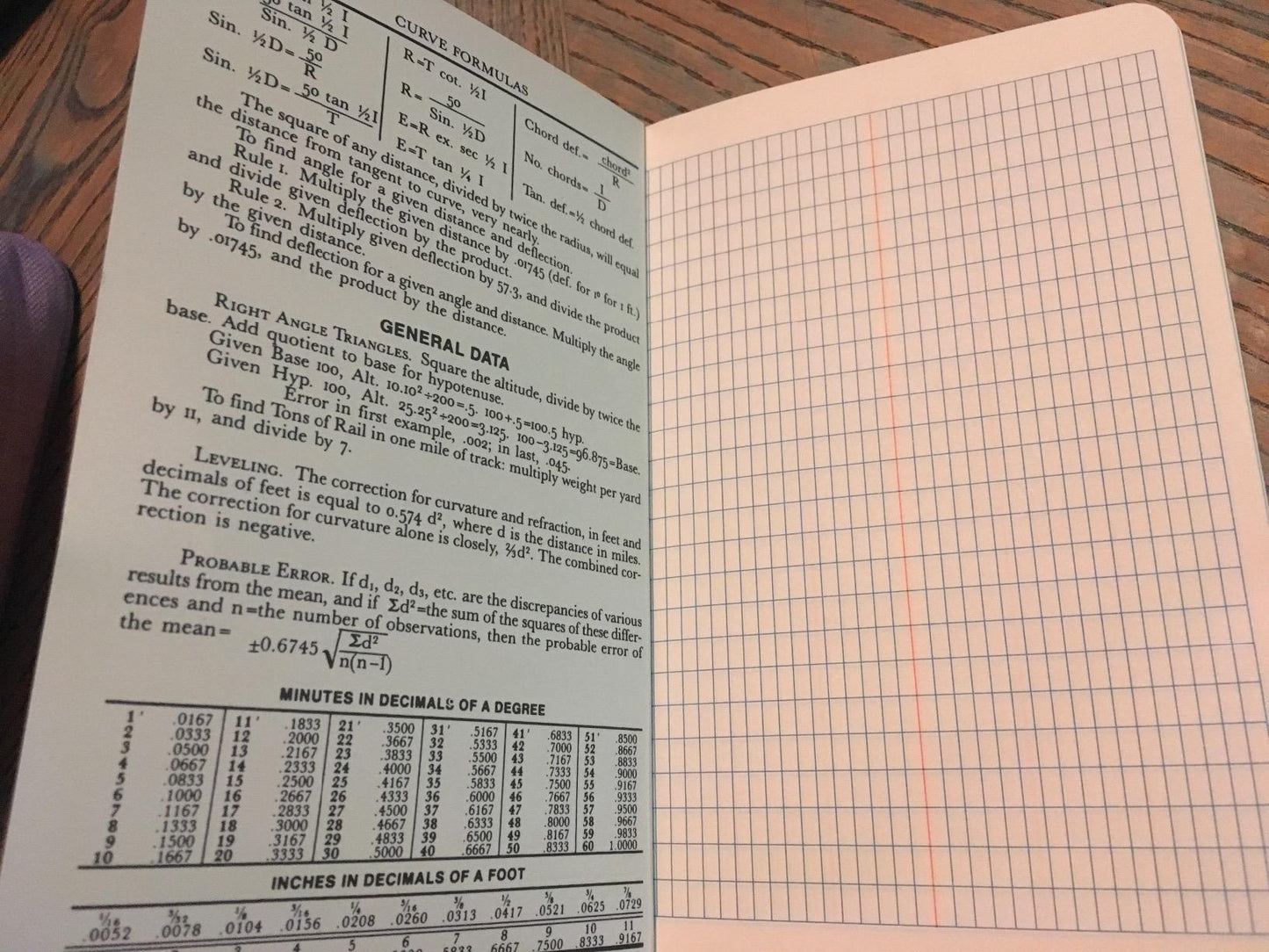
- Pre-ruled dual-format pages (6 columns left, 8x4 grid right) eliminate time-consuming setup
- Sewn binding holds up under rugged handling where glued notebooks fall apart
- Archival-quality paper preserves legally important field records for decades
Perfect for
- Recording traverse, boundary, and topographic measurements in the field
- Logging forestry stand data and environmental observations on-site
- Documenting construction layout, elevations, and inspection notes
- Plotting grid-based data sketches alongside tabulated measurements
- Archiving permanent field records for legal and project documentation
About this item
The Elan Publishing Company sewn field book has sturdy cover with 64 pages. Inside quality white Ledger paper is special formulated for maximum Archival service with material that is 50 percent cotton and water resistant.
- Package Dimensions : 8.19 x 4.8 x 0.51 inches; 1.59 ounces
Frequently Asked Questions
Will this field book hold up if it gets rained on during a trail survey?
Yes. The 50% cotton ledger paper has a water-resistant finish that keeps notes legible in rain, mud, and humid conditions, so a sudden downpour during an outdoor traverse won't wipe out your data.
Is this notebook easy to carry on long backcountry hikes?
At 4 5/8 x 7 1/4 inches and only 64 pages, it slips into a vest or cargo pocket without bulk, making it comfortable to carry on multi-mile forestry and trail mapping work.
Can I spot this book quickly if I set it down in leaves or brush?
The high-visibility orange stiff cover is specifically designed to stand out against natural backgrounds like leaves, snow, and dirt, so you can find it fast when you set it down to take a reading.
Will the cover bend or tear if I throw it in my pack with other gear?
The orange cover is reinforced to resist bending and weather, and the sewn binding keeps pages intact even when the book is wedged between tools, rangefinders, and other field equipment.
Does the binding survive being used one-handed in windy conditions?
Yes. The sewn binding holds up under rugged handling where glued notebooks fall apart, so pages stay attached even when you're flipping one-handed while holding a rod or GPS unit in the wind.
Is this a good field book for forestry stand data on remote woodland sites?
Yes. Foresters rely on it for logging stand data and environmental observations because the water-resistant paper, sewn binding, and pocket size make it dependable in remote woodland conditions.
Can I use this book for wetland studies where pages normally turn to mush?
Yes. The water-resistant 50% cotton paper is built for wet-site use, which is exactly the environment wetland researchers work in, so your notes stay readable throughout the day.
Does the orange cover help with visibility on a busy survey site with lots of gear?
Absolutely. The bright orange color is easy to spot among tripods, prisms, range poles, and crew gear, so it rarely gets lost or accidentally packed up with equipment at the end of a traverse.
Will it fit in a chest or cargo pocket while I'm scouting remote sites?
Yes, the 4 5/8 x 7 1/4 inch dimensions are specifically sized to be pocket-portable, so it fits standard surveyor and forester chest pockets without needing a separate bag.
Is this book better than a standard spiral notebook for outdoor recording?
For field work, yes. The sewn binding, water-resistant paper, and stiff orange cover are engineered for outdoor durability, while a standard spiral notebook tends to snag, tear, and soak through in the same conditions.
Can I use this book for hiking GPS waypoint logs in addition to survey work?
Yes. The dual-format pages with columns on the left for waypoint data and a grid on the right for sketch mapping work well for logging GPS coordinates alongside terrain notes on a hike.
How does the sewn binding hold up if the book gets dirty or muddy?
Sewn binding is mechanically stitched through each signature, so it stays intact even when caked in mud, whereas glued spines typically swell and release pages when exposed to moisture and dirt.
Will the pages hold up if I need to dry the book near a campfire?
The 50% cotton ledger paper tolerates field drying conditions much better than standard wood-pulp paper, holding its shape and keeping ink legible even after exposure to moisture and moderate warmth.
Is the cover stiff enough to write on in the field without a clipboard?
Yes, the stiff cover is designed to provide a firm writing surface on its own, so you can brace it against your knee or thigh to take measurements without needing a separate clipboard.
Does the bright orange color fade after months of sun exposure?
The cover is built for outdoor use, but like any colored material left in direct sun for extended periods, some fading is possible over time. Keeping it stored in a pack when not in use will preserve the visibility color longest.
I'm worried this notebook will fall apart before I finish a long mapping project, is that likely?
The sewn binding and water-resistant 50% cotton paper are specifically chosen to last through full multi-season field projects, so for a typical traverse or forestry inventory, it is built to outlast glued or all-wood-pulp alternatives.
How do I set up the book for recording a traverse?
Open to a fresh page, record the project name, date, crew, and instrument information at the top of the left columns, then begin logging point number, backsight, foresight, horizontal distance, and vertical readings in order. Use the right-hand grid to sketch the traverse layout alongside each setup.
How should I store the book between field sessions?
Keep it in a dry place like a desk drawer or vehicle cab, ideally flat rather than folded or compressed, and avoid prolonged direct sunlight to preserve the cover color. For long-term archival storage, store it in an acid-free folder or box at normal room humidity.
What is the best way to scan or copy pages from this book?
Photocopy or scan pages while the book lies flat, pressing the spine gently to avoid shadows near the binding. Because the ruling is light, increasing the scan contrast slightly can help column lines and grid reproduce more clearly for digital archives.
Does this book fit standard surveyor vest pockets?
Yes, the 4 5/8 x 7 1/4 inch dimensions are designed to fit the chest and cargo pockets found on standard surveyor and forester vests, as well as most jacket and cargo pants pockets.
Is this book compatible with archival scanning and microfilm standards?
Yes, the 50% cotton ledger paper meets archival quality standards and is suitable for scanning, microfilming, and long-term digital archiving of legal and project records.
What comes in the package when I order this book?
You receive one Elan Publishing Company field surveying book with 64 pages (32 sheets) of pre-ruled 50% cotton ledger paper, bound in a high-visibility orange stiff cover. No additional accessories, pens, or rulers are included.
Is the paper safe to handle for people with sensitive skin?
Yes, the 50% cotton ledger paper is a standard archival writing surface with no unusual chemical treatments that cause skin irritation during normal use.
Will the book remain usable if it gets bent or crumpled in transit?
The sewn binding and stiff cover are designed to absorb rough handling, so minor bending typically flattens back out. Significant crumpling may crease pages but usually does not affect legibility or the binding's function.
What is the difference between a field book, a survey notebook, and a standard notebook?
A field book or survey notebook uses archival, water-resistant cotton paper with pre-printed ruling designed for measurements and sketches, and a sewn binding built for rugged use, while a standard notebook typically uses wood-pulp paper, glue binding, and blank or lightly ruled pages suited to office use rather than outdoor documentation.